Top Examples of Unusual Experiential Marketing Campaigns.
Offbeat experiential marketing ideas that actually worked (and what they teach us).
Unusual Experiential Marketing Ideas That Actually Worked (and what they teach us)
Not every great brand experience or experiential marketing campaign has to involve a huge budget, VR headset or influencer partnership. Some of the best experiential marketing ideas are the weird ones. The unusual ones. The uncommon ones. The ones that make people stop, laugh, question what they’re seeing, and pull out their phones. The unusual experiential marketing campaigns are the ones that often work and that’s why they’re called ‘experiential’.
Now we know plenty of the usual suspects. The big experiential campaigns that made the headlines in our industry and were well covered on LinkedIn. So here’s a look at some of the most unusual, unexpected, and brilliantly creative experiential campaigns from around the world. We could look at the obvious ones all day but what about the ones that really count? Here’s your take on the top off-the-wall experiential marketing examples – including one of our own – that prove thinking differently really does get noticed.



Castello Cheese ‘Eat the Art’
Turning cheese into a gallery.
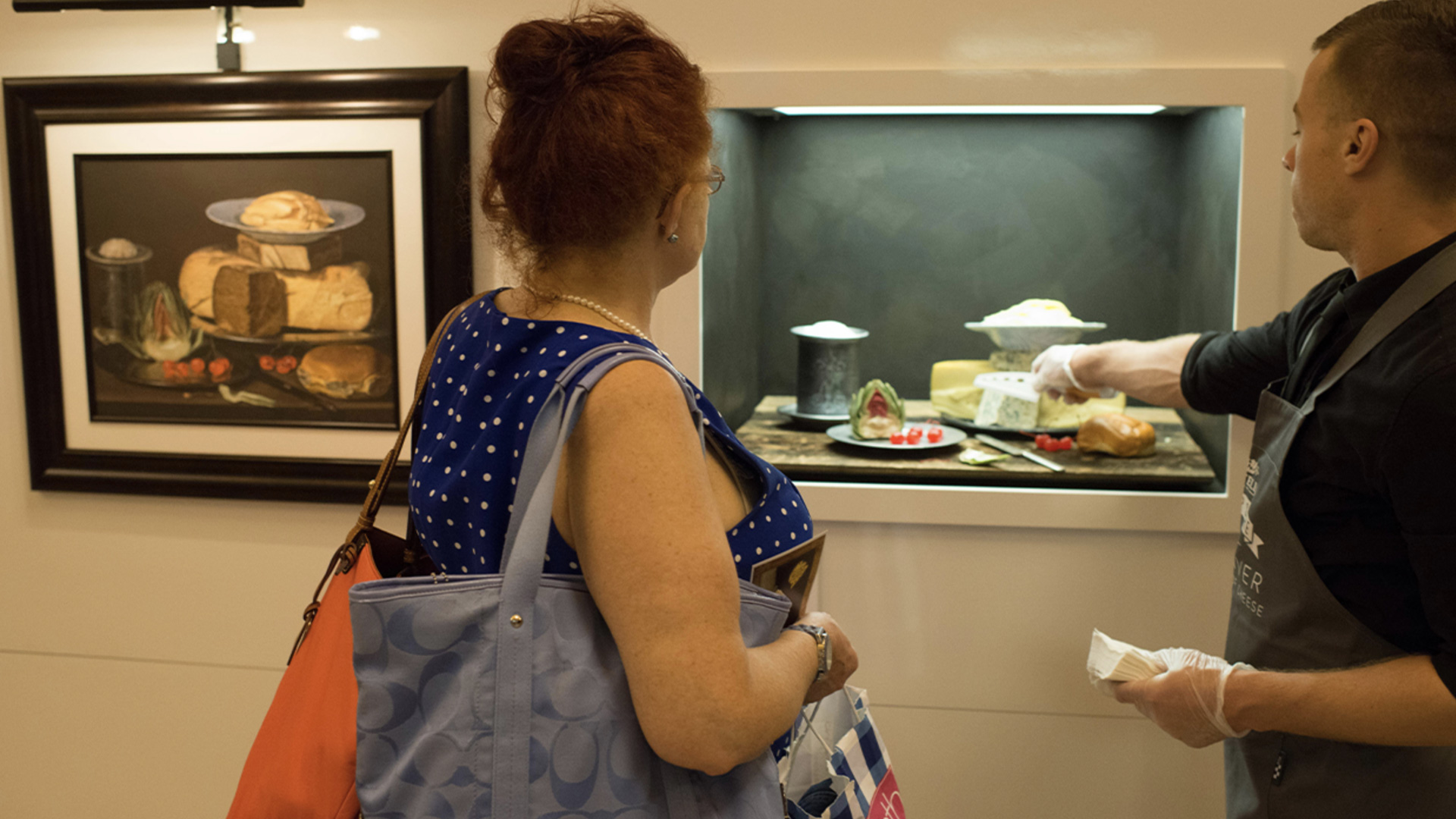
Most food brands talk about being “artisanal.” Castello Cheese decided to show it, literally. At New York’s Grand Central Terminal, Castello invited commuters to an edible art gallery where the paintings were made entirely of cheese. Passers-by could taste famous artworks like Van Gogh’s Starry Night and Monet’s Water Lilies, all sculpted from the brand’s product range.
Why it worked.
It was equal parts gallery, sampling event and performance art. Plus it made an ordinary food brand feel premium, playful and intelligent. Turn your brand truth into theatre. Sometimes the smartest way to show craftsmanship is to let people experience it in the most unexpected setting imaginable.
Life360 × iMP – Swear Therapy
Giving parents permission to vent.
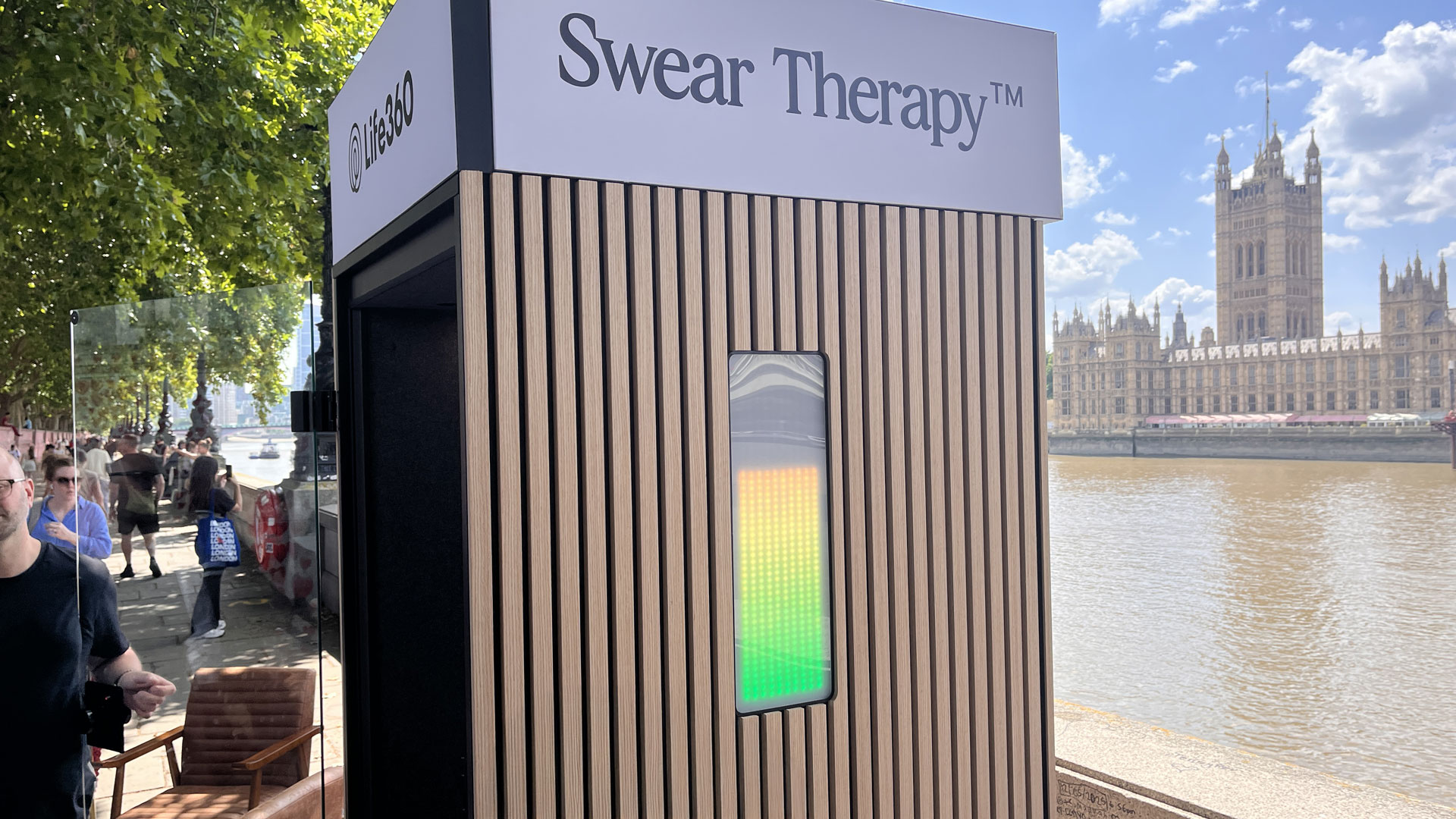
For Life360, the family safety app, we created something totally different: a chance for parents to let off steam. “Swear Therapy” was an unapologetically tongue-in-cheek pop-up that invited people to step inside soundproof booths and vent their frustrations, guilt-free. It tapped into something real and the chaos and stress of family life but delivered it with humour and honesty.
Why it worked.
Press coverage rolled in, parents loved it, and the campaign sparked conversations about family wellbeing in a way no digital ad ever could. Honesty is powerful. Experiential marketing works best when it taps into emotion, even the messy ones.
RedBull – Stratos Jump
Why RedBull blew everyone’s mind.
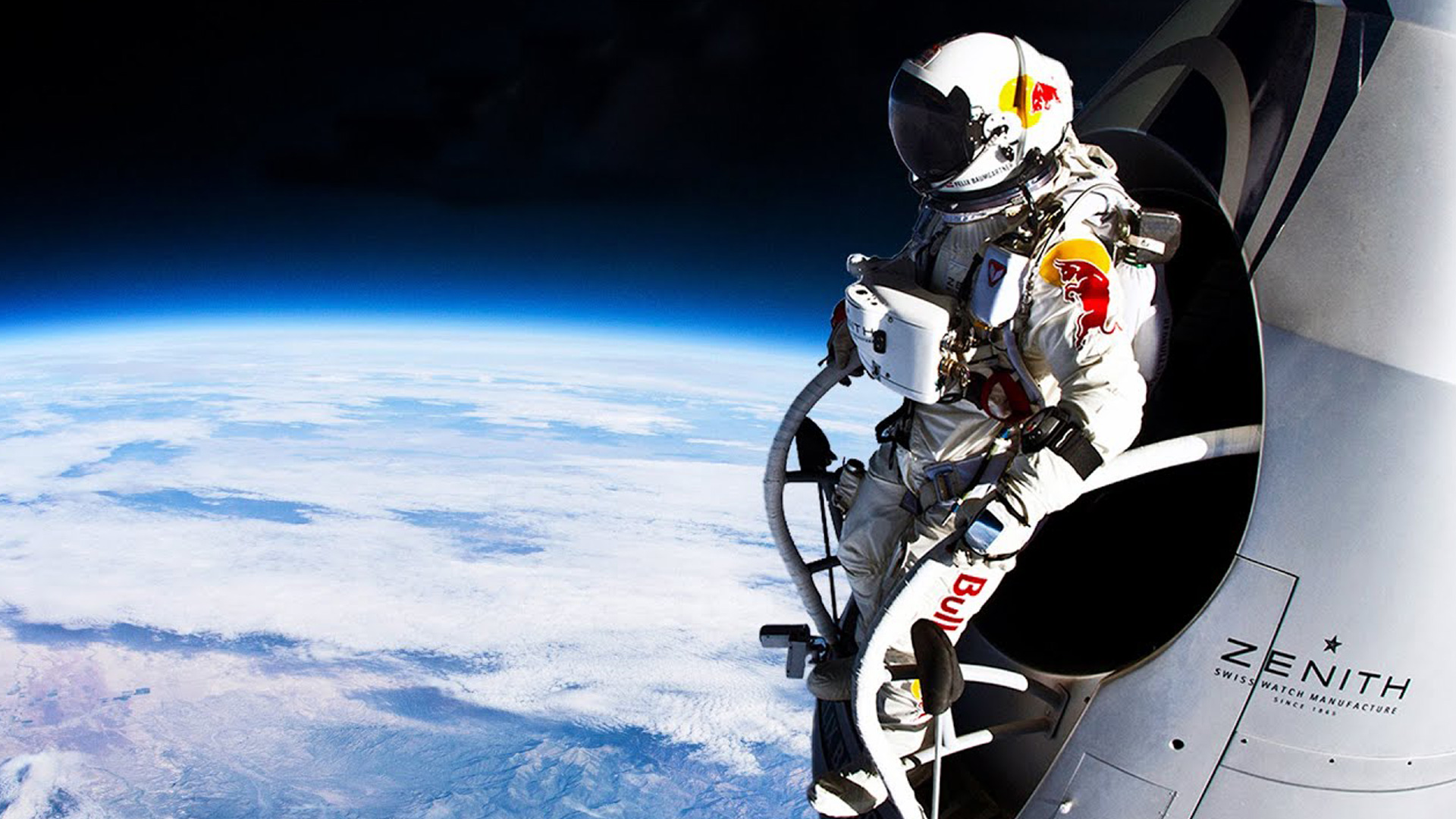
In 2012, Red Bull didn’t just sponsor a daredevil, they sent a man to the edge of space and told him to jump. Felix Baumgartner leapt 39 kilometres down to Earth, breaking the sound barrier on the way. The entire planet watched live as Red Bull turned its slogan “Gives you wings” into a real-world event.
Why it worked.
Because it wasn’t marketing. It was a global “holy f***” moment. Red Bull didn’t just tell people it was about adrenaline, adventure, and madness, it proved it on a scale no one else would dare attempt. If you want your brand to stand for something bold, sometimes you have to actually do something bold. Red Bull didn’t make an ad; they made history.
Netflix: The Stranger Things Upside Down Experience
What was the Stranger Things experiential activation?
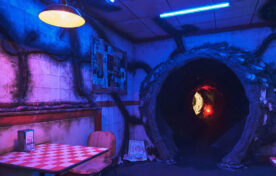
To promote new seasons of Stranger Things, Netflix transformed ordinary public spaces into eerie, real-world portals to the Upside Down. From a London arcade that flickered with retro neon and Demogorgon vines, to the full-on “Hawkins Lab” pop-up and immersive underground events, fans were literally pulled into the show’s twisted 1980s universe. In one standout stunt, the Upside Down Portal in Milan appeared to be tearing through a subway wall, complete with lighting effects, static noise, and tentacles reaching into the station. It stopped commuters in their tracks and went viral within hours.
Why did it work?
Because it blurred the line between fiction and reality. Fans didn’t just watch Stranger Things, they lived it. Every element was designed for shareability and nostalgia, pulling in everyone from diehard superfans to casual onlookers who couldn’t resist grabbing a photo. If your brand lives in a strong world, build that world for real. Let people walk inside it, feel it, and freak out a little – that’s how you turn fandom into obsession.
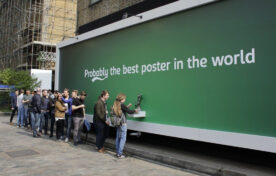
Carlsberg – Probably the Best Poster in the World
What was the “Carlsberg Best Poster” campaign?
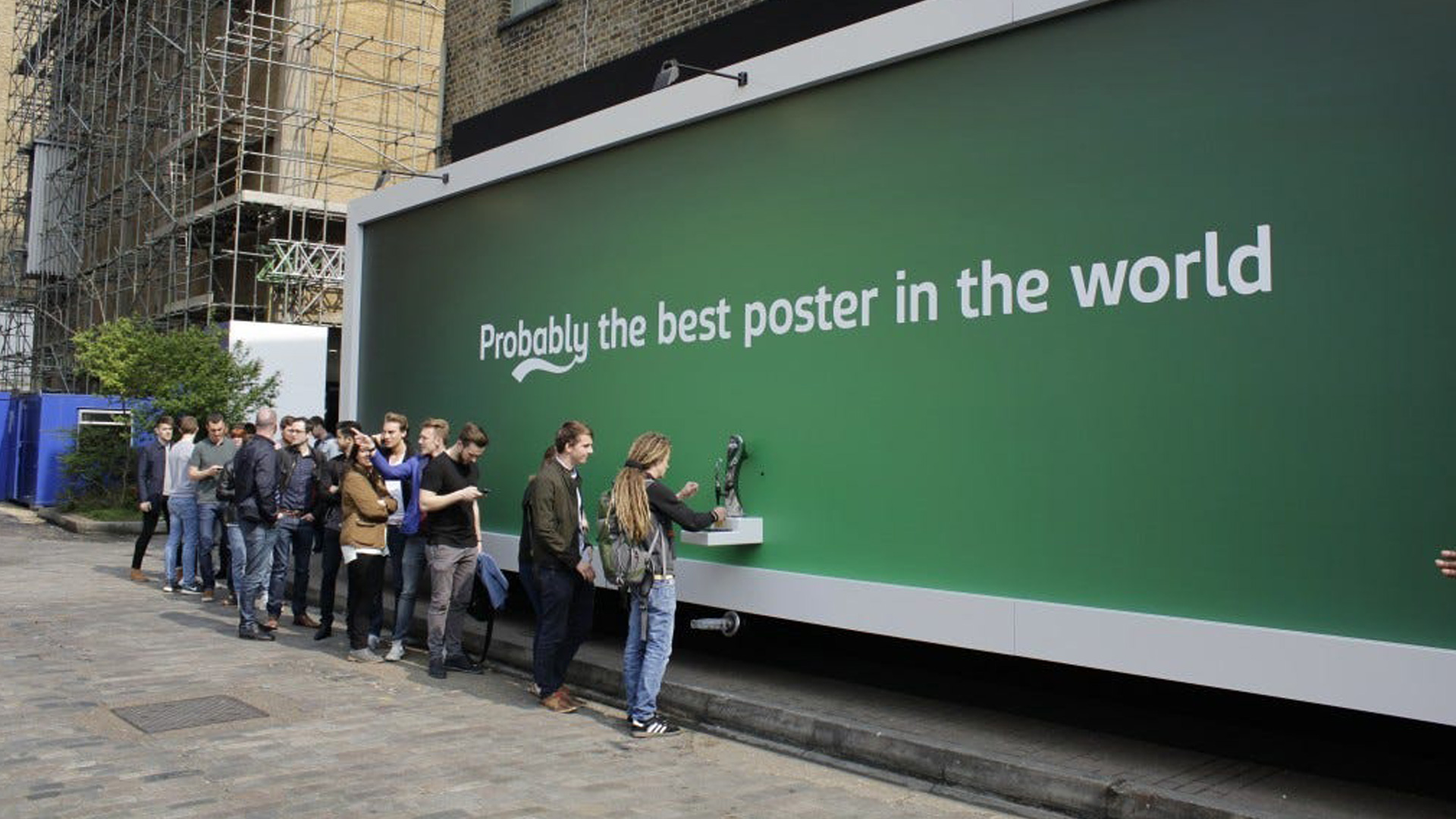
Carlsberg put up a billboard in London that actually poured real beer. Passers-by could pull a pint straight from the wall. A simple, physical interpretation of their iconic tagline: “Probably the best lager in the world.”
Why did it work?
It was self-aware, smart, and utterly simple. No gimmicks, just pure brand storytelling you could drink. The crowd queues, selfies, and social coverage were inevitable. Your tagline isn’t just a line, it’s a blueprint for an experience. If you can bring your promise to life physically, you’re already halfway to iconic.
Specsavers – The Bollard Stunt (2024)
What was the Bollard Stunt?
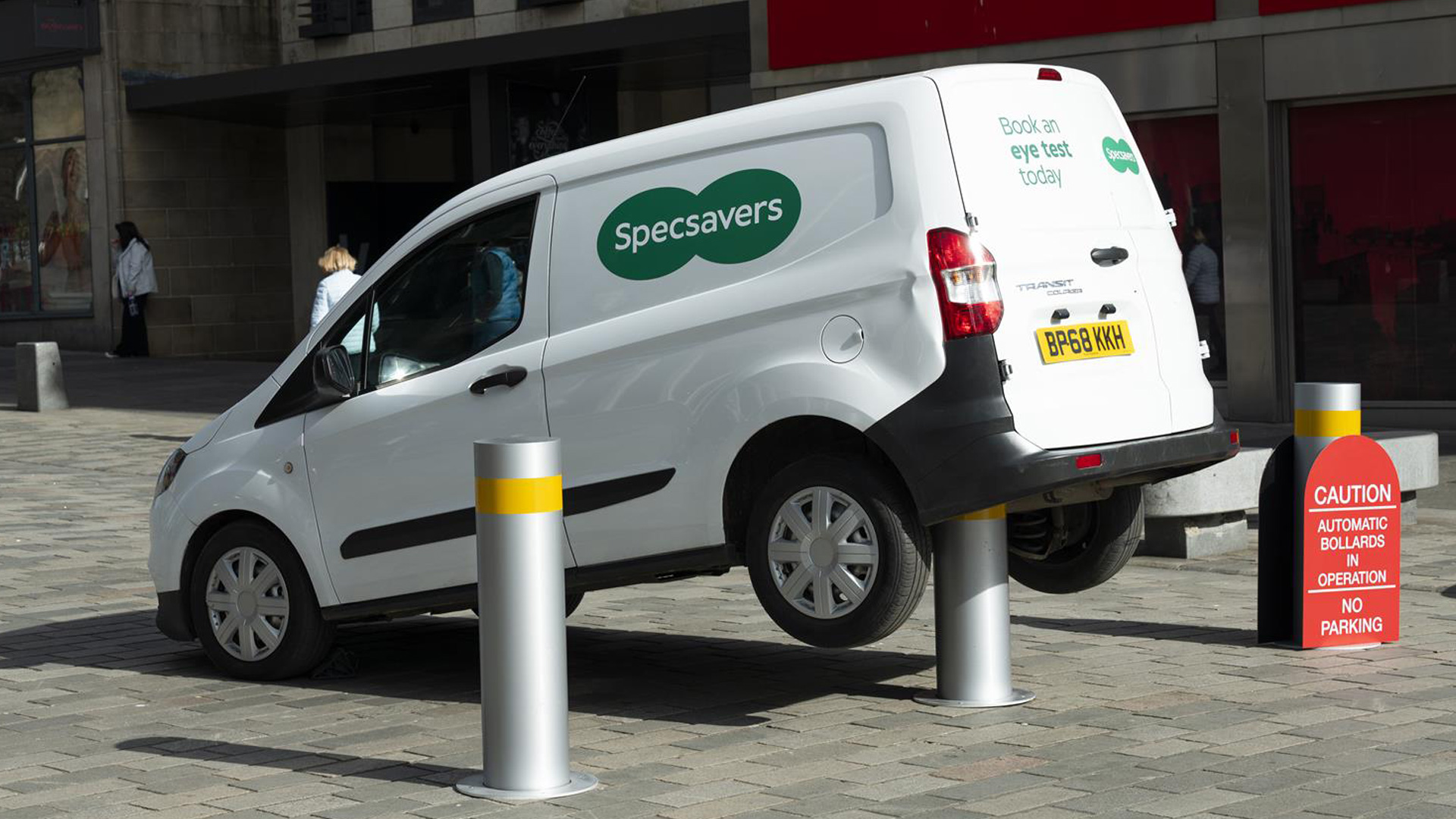
In 2024, Specsavers staged a perfectly simple joke: a branded van parked “accidentally” on top of a rising bollard, right next to a bright yellow “Warning: Bollards in Operation” sign. No hashtags. No CGI. Just physical comedy, perfectly executed in real life.
Why did it work?
Because everyone instantly got it. It was pure Specsavers humour. Visual, cheeky, and perfectly aligned with their “Should’ve gone to Specsavers” line. Within hours, photos of the “accident” went viral. You don’t need tech or spectacle to go viral. Just a sharp, funny idea that’s unmistakably on brand.
What these campaigns teach us
What ties all these ideas together, from edible cheese art to swearing booths, bollard crashes, and space jumps, is creative courage. None of them played it safe. They took risks, made people feel something, and turned brand ideas into unforgettable moments. Experiential marketing isn’t about budgets or gimmicks. It’s about humanity, humour, emotion, and surprise. Be brave enough to do something that makes people stop mid-scroll and say, “Wait, what the hell is that?” That’s where the magic happens.
Ready to make something brilliantly unexpected?
At iMP Experiential & Product Sampling, we help brands stand out in the real world with creative, measurable, and conversation-starting campaigns. From smart sampling to large-scale activations, we turn bold ideas into tangible results. If you’re ready to create something that people actually talk about, get in touch.
-
The most successful experiential marketing campaigns create a real emotional response. It’s not about how big the budget is — it’s about how well the experience connects to the brand’s story. Whether that’s humour, surprise, or a simple moment of delight, success comes from giving people something they genuinely want to talk about and share.
-
Yes, and that’s exactly why they work. The key is calculated risk: pushing boundaries without losing sight of the brand’s values or audience. Campaigns like Specsavers’ Bollard Stunt or iMP’s Swear Therapy stand out because they feel unexpected but still on-brand. That balance between bravery and strategy is what earns attention.
-
Absolutely. Experiential marketing doesn’t have to mean large-scale festivals or multi-city tours. Many of iMP’s most effective activations, from high street sampling to mobile pop-ups, deliver massive impact with focused budgets. It’s about creativity, not cost. Smart ideas, not scale, make experiences memorable.
-
Start with your audience, not your product. Ask what would surprise them, delight them, or make them feel seen. Then look for intersections between your brand’s truth and real human behaviour, the odd, funny, or emotional moments people already experience in daily life. The best ideas usually hide there.