Why Product Sampling Works So Well for Beauty and Cosmetics Brands.
Our guide to beauty and cosmetics product sampling in the UK.
Why beauty brands sample differently.
Product sampling works for almost every category. But it works particularly well for beauty and cosmetics brands and the reason is straightforward.
A fragrance, a body mist, a skincare product or a cosmetic cannot be understood from a shelf. The packaging tells you what it claims to do. The price tells you where it sits in the market. But neither of those things tells you how it smells on your skin, how it feels on application, or whether it’s actually something you’d use. That sensory gap is where sampling closes the sale.
For beauty brands, trial is not a nice-to-have in the marketing mix. It is the most direct route between product and purchase. And when sampling is executed well with the right location, the right staff and the right format it consistently outperforms digital advertising for driving first purchase in the category.
If you’re planning a cosmetics sampling campaign, you may also find our guides on How to Plan a Successful Product Sampling Campaign and How Much Does Product Sampling Cost useful.

The sensory case for beauty sampling.
Every cosmetics brand faces the same fundamental challenge: persuading a consumer to try something they’ve never experienced before.
Digital advertising can build awareness and generate interest. Retail displays can communicate positioning. But neither puts the product in the consumer’s hands. And for beauty and fragrance specifically, what happens when the product reaches the consumer’s skin is what everything else is building towards.
This is why sampling conversion rates in beauty consistently outperform other FMCG categories. A consumer who has tried a fragrance, applied a body mist or tested a skincare formula has already done the hardest part of the purchase decision. They’re not being asked to take a risk on something unknown, they’re being asked to buy something they already know they like.
That shift from unknown to known is what sampling creates. And it’s why beauty brands with genuine product quality invest in it heavily.
So…? Fragrance: a roadshow built around trial.
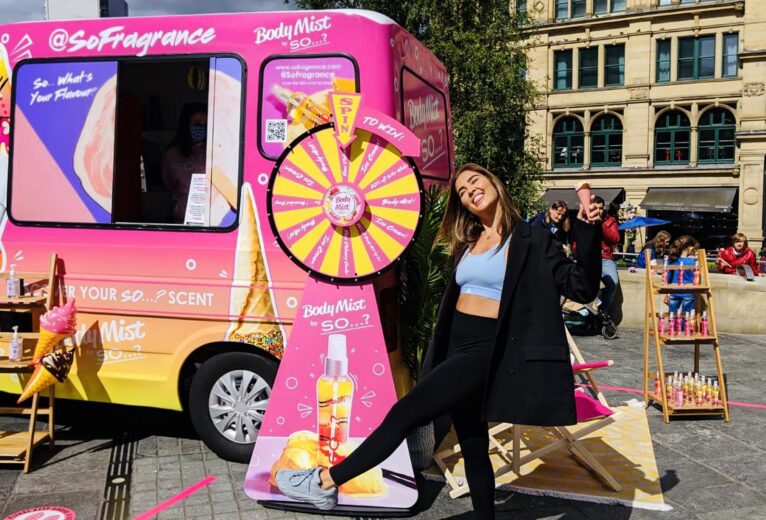
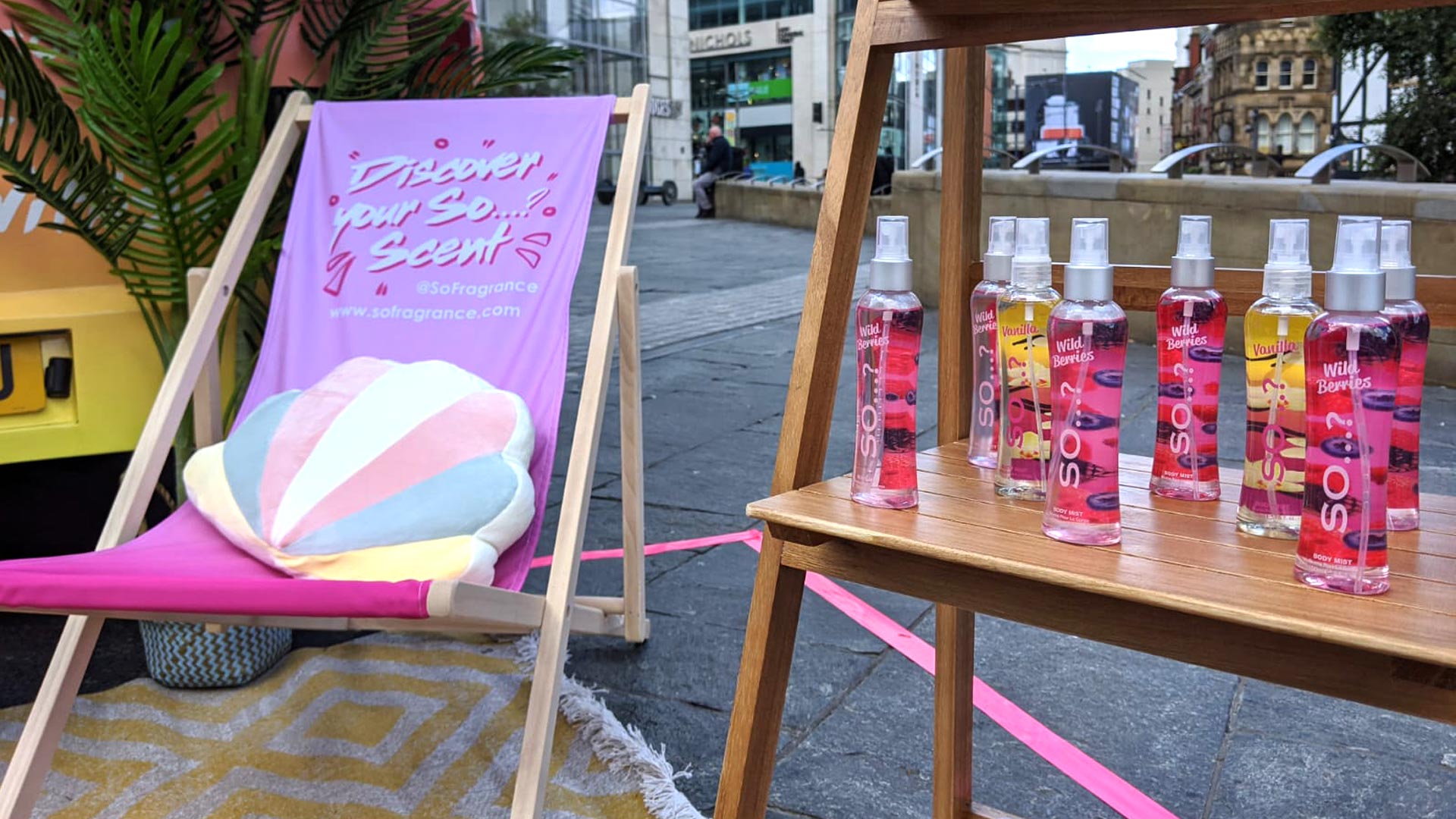
When So…? launched a new range of body mist products and flavours, the campaign brief was built around getting the product directly into consumers’ hands at scale across multiple cities, in high footfall locations, in a format that created genuine engagement rather than passive distribution.
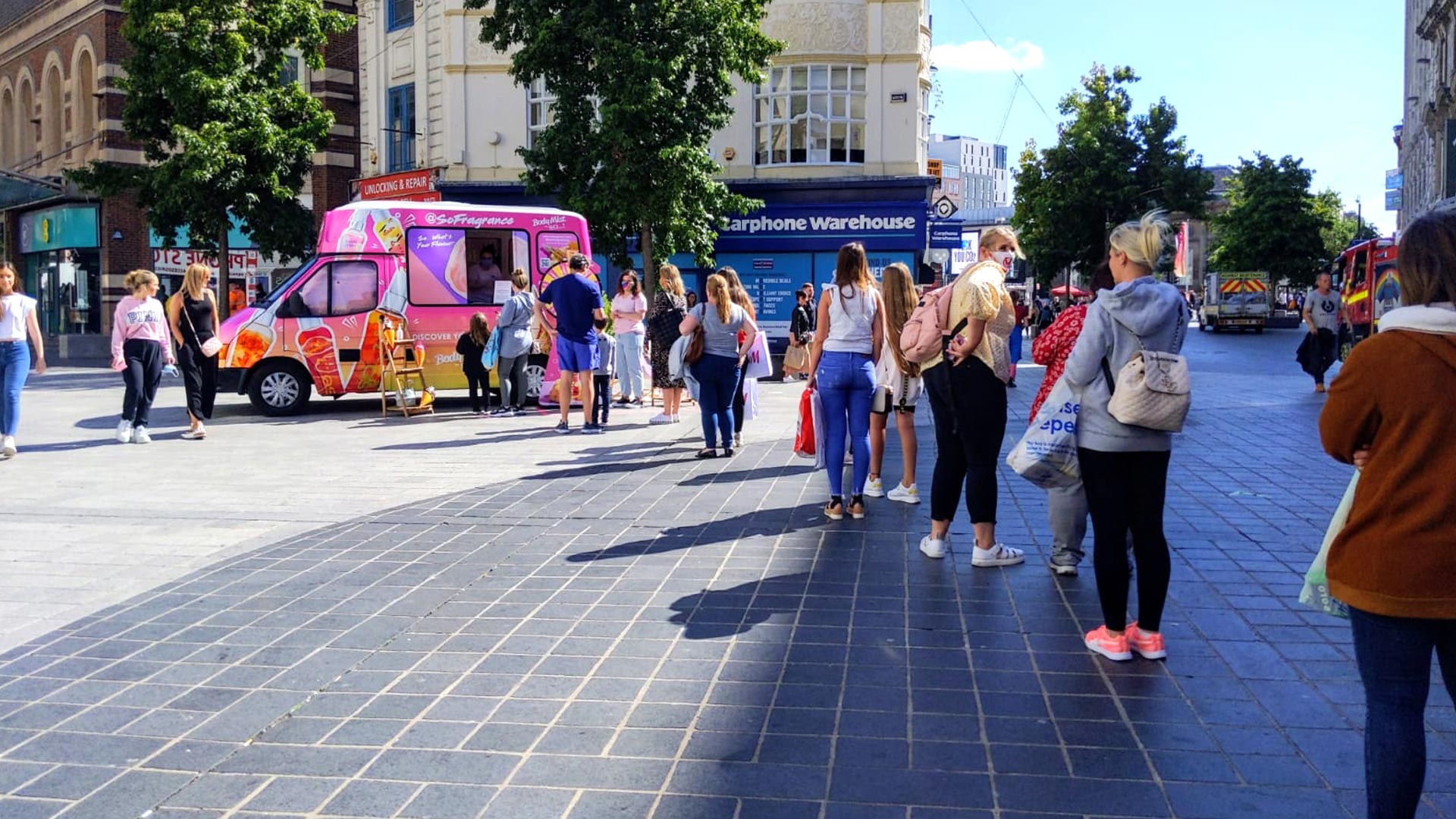
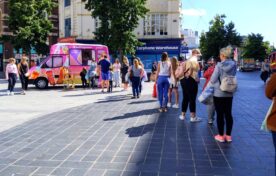
iMP delivered a branded roadshow using a fully wrapped ice cream van visiting eight town and city centre locations across the UK in ten days, Whitby, Scarborough, Manchester, Liverpool, Cardiff, Swansea and London among them.
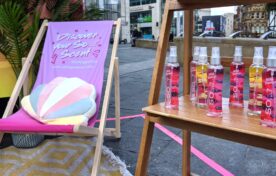
The format did several things simultaneously. The wrapped vehicle created high visual impact on arrival in each location, generating attention before a single sample was handed out. An interactive ‘wheel of fortune’ mechanic gave consumers a reason to stop and engage, with free ice creams available to win on the spot. And money-off next purchase voucher codes were distributed alongside the samples to drive conversion into retail and online sales after the activation.
The result was a campaign that combined mass sample distribution with genuine brand experience — not a hand-and-go operation, but an interaction consumers chose to participate in.
Why the roadshow format suits beauty brands.
A static sampling station works well in some contexts. But for beauty and fragrance launches, the roadshow model delivers advantages that a fixed activation cannot.
Geographic coverage. A ten-day tour across eight cities reaches audiences that a single location activation never could. For a product launch, that breadth of coverage matters — it creates the impression of a brand that is everywhere at once, which amplifies the PR value of the campaign beyond the direct samples distributed.
Tailored audience matching. Different cities have different demographics, different shopping behaviours and different retail footprints. A roadshow allows the campaign to move through each market and intercept the right consumers in each location — coastal towns for a summer body mist campaign, city centres for a younger urban demographic.
The vehicle as brand asset. A fully wrapped promotional vehicle is not just a logistics solution. For a beauty brand, it is a moving piece of brand communication. Every mile travelled between cities generates viewing opportunities from other road users. Every arrival at a new location creates a moment of attention. The So…? campaign used this to full effect — the ice cream van format was visually distinctive, playful and entirely on-brand for a body mist product aimed at a younger female audience.
What makes a beauty sampling campaign work?
Across every beauty and cosmetics sampling campaign we’ve delivered, the variables that consistently drive the best results are the same.
Staff who understand the product. In beauty, the brand ambassador is the first point of contact between the product and the consumer. They need to be able to answer questions, explain the product’s positioning, and deliver the brand’s tone of voice consistently. For a fragrance or a cosmetics launch, this is not a generic hand-out role – it requires genuine product knowledge and the ability to have short, confident conversations about what the product does and who it’s for.
A mechanic that earns attention. The most effective beauty sampling activations give consumers a reason to stop rather than simply offering something for free. The So…? wheel of fortune is one example. A skin consultation, a personalised recommendation, a limited-edition gift with sample… any mechanic that creates a moment of interaction produces better engagement quality than passive distribution.
Proximity to retail. For a beauty brand with existing retail distribution, placing the sampling activation near the stockist matters. A consumer who has just tried a fragrance and is standing outside a Boots or Superdrug has a much shorter conversion path than one who tried it three streets away. Where possible, sampling routes should be planned around retail proximity.
Voucher or MONP redemption. Money-off next purchase codes distributed at the point of sampling extend the campaign’s commercial impact beyond the activation itself. For beauty brands, this also provides a measurable data point on conversion: how many consumers who received a sample went on to purchase within a defined window.
Beauty product sampling across formats.
Beauty and cosmetics brands have used almost every sampling format effectively, depending on their product type, target audience and distribution strategy.
City centre sampling: works well for mass-market and accessible premium brands targeting a broad demographic. High footfall locations in shopping areas or transport hubs deliver volume and visibility.
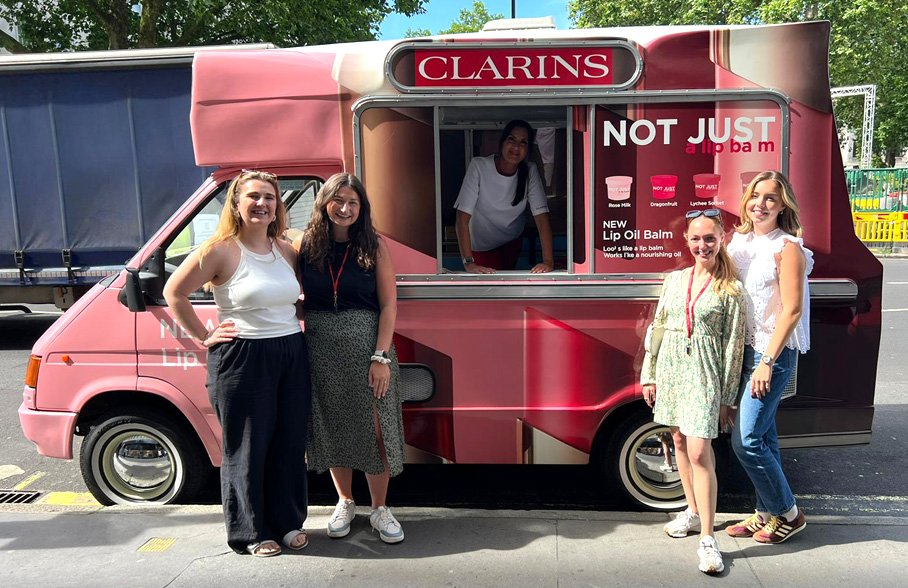
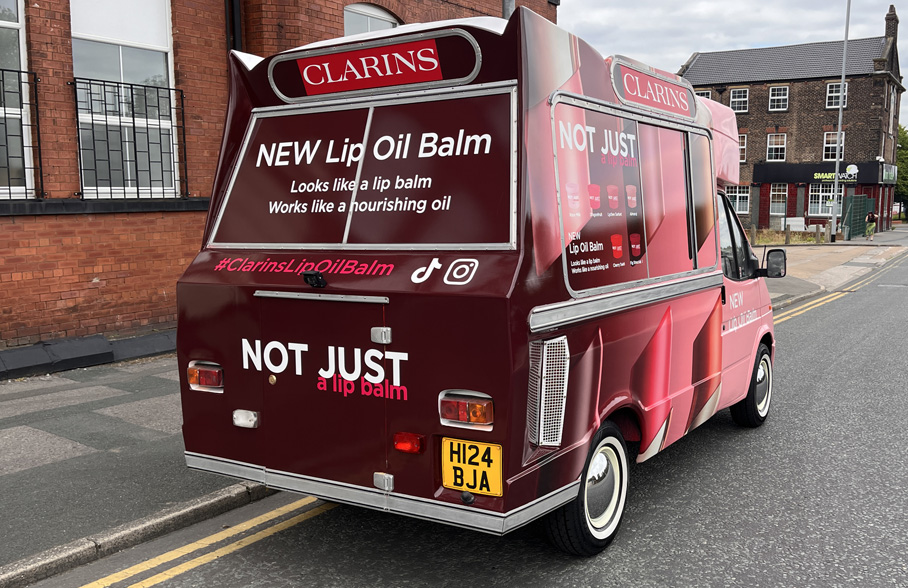
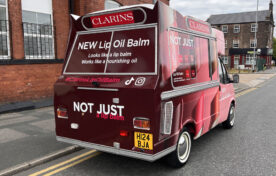
Promotional vehicles: ice cream vans, sampling vans, custom-wrapped vehicles suit launches where the brand identity is strong enough to carry a visual execution on the street. They work particularly well for fragrance and body care categories where the playfulness of the format matches the product personality.
Supermarket and in-store sampling: suits established beauty brands with existing cosmetic distribution looking to drive trial and rate of sale at point of purchase.
Event and festival sampling: works well for brands targeting a specific lifestyle demographic such as fitness, music, wellness, where the audience self-selects and dwell time enables longer brand interactions.
The right format depends on the product, the audience and the commercial objective. For a new fragrance launch targeting 18–34 year-old women in urban markets, a roadshow with a visually distinctive vehicle and an interactive mechanic will almost always outperform a static in-store activation.
Ready to plan your beauty sampling campaign?
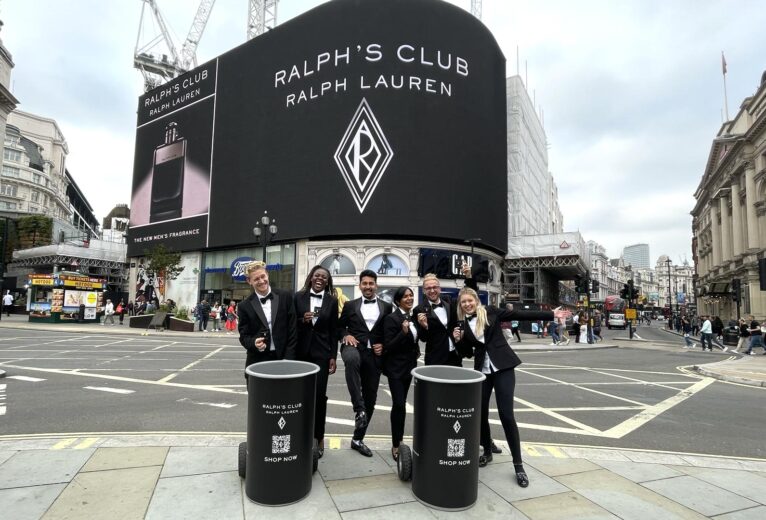
iMP has delivered sampling campaigns for beauty and fragrance brands including So…?, Ralph Lauren and Clarins. Our Product Sampling Services cover everything from branded vehicle roadshows to city centre activations and in-store sampling. Get in touch to discuss your next launch.